
Self vs Default Tax Assessment: How KRA Determines the Default Tax Assessment
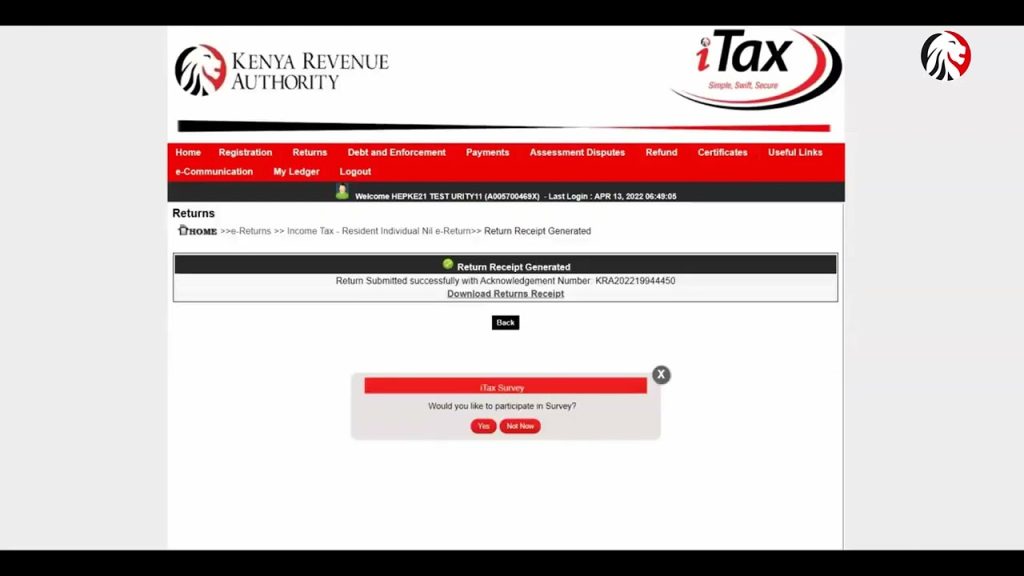
What is a Self Tax Assessment?
A self-assessment is a tax assessment prepared and submitted by a taxpayer based on their own calculation of tax liability.
The concept is established under the provisions of the Tax Procedures Act, 2015, which requires taxpayers to determine their tax liability, file returns, and pay taxes due within the prescribed timelines.
Under the self-assessment system:
- The taxpayer computes taxable income.
- The taxpayer determines the tax payable.
- The taxpayer files the relevant tax return.
- The taxpayer pays the tax due.
The KRA subsequently reviews the return and may accept it or conduct further verification.
Key Features of Self-Assessment
- Responsibility lies with the taxpayer.
- The taxpayer maintains supporting records.
- Returns are filed voluntarily within statutory deadlines.
- Taxes are paid based on the taxpayer’s own calculations.
- KRA may later review or audit the return.
Examples of Self-Assessment
Income Tax
A company prepares financial statements, computes taxable profit, applies allowable deductions, calculates corporation tax, files the return, and pays the tax due.
VAT
A registered taxpayer computes output VAT, deducts allowable input VAT, determines the net VAT payable, and files the monthly VAT return.
PAYE
An employer calculates employees’ tax deductions and remits them to KRA through monthly PAYE returns.
What is a Default Tax Assessment?
A default assessment is an assessment made by the Commissioner when a taxpayer fails to submit a tax return by the prescribed due date.
The legal basis is found in Section 29 of the Tax Procedures Act, 2015, which empowers the Commissioner to determine a taxpayer’s tax liability using the information available where a taxpayer has failed to submit a return.
In simple terms, when a taxpayer fails to declare their tax position, KRA steps in and estimates the tax payable.
Circumstances Leading to a Default Assessment
KRA may issue a default assessment where:
- A taxpayer fails to file an Income Tax return like on this case by 30th June 2026.
- A taxpayer fails to submit a VAT return.
- An employer fails to file PAYE returns.
- A taxpayer repeatedly files nil returns despite evidence of business activity.
- KRA believes tax is payable but no return has been filed.
How KRA Determines a Default Assessment
KRA may rely on:
- Previous tax returns.
- Banking information.
- eTIMS records.
- Third-party information.
- Industry benchmarks.
- Financial data obtained during investigations.
- Other information available to the Commissioner.
Because KRA may not have complete information, the resulting assessment may be significantly higher than the taxpayer’s actual liability.
Major Differences Between Self-Assessment and Default Assessment
| Aspect | Self-Assessment | Default Assessment |
| Who prepares it? | Taxpayer | KRA Commissioner |
| Legal trigger | Voluntary compliance | Failure to file returns |
| Basis of computation | Actual taxpayer records | Available information and estimates |
| Accuracy | Usually more accurate | May be estimated |
| Taxpayer involvement | Full participation | Limited participation |
| Risk of penalties | Lower when compliant | Higher due to penalties and interest |
| Control over tax position | Taxpayer controls calculations | KRA determines liability |
Advantages of Self-Assessment
- Promotes voluntary compliance.
- Reduces disputes with KRA.
- Allows taxpayers to claim all allowable deductions.
- Results in more accurate tax computations.
- Minimizes penalties and interest.
Risks of Default Assessment
- Overstated tax liabilities.
- Additional penalties and interest.
- Increased likelihood of enforcement action.
- Potential agency notices to banks and customers.
- Costly objection and appeal processes.
What Should Taxpayers Do After Receiving a Default Assessment?
If a taxpayer receives a default assessment:
- Review the assessment immediately.
- Gather supporting records.
- File any outstanding returns.
- Lodge a Notice of Objection within thirty days if the assessment is disputed.
- Engage a qualified tax professional where necessary.
Failure to object within the statutory timelines may result in the assessment becoming final and payable.
Why Taxpayers Should Prioritize Compliance
The Kenyan tax system is largely built on self-assessment. KRA expects taxpayers to maintain proper records, file accurate returns, and pay taxes on time.
With the introduction of digital compliance tools such as eTIMS and increased data sharing between institutions, KRA has greater visibility into taxpayer transactions than ever before. Taxpayers who fail to file returns expose themselves to default assessments, penalties, interest, and possible enforcement action.
